

Pakistan’s Auto Industry Accelerates as Car Sales Jump 48% in First Four Months of FY27
Thursday, 12 November 2026
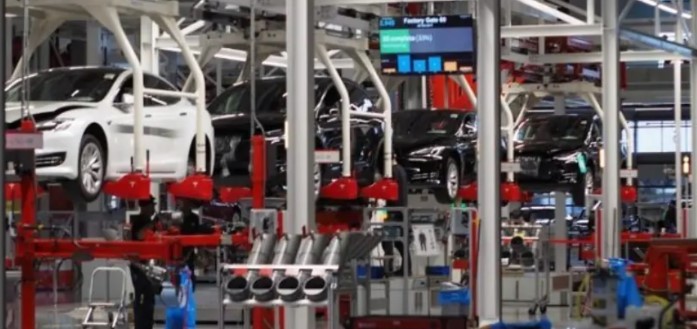
Passenger Vehicle Sales Reach 63,418 Units from July to October; Tractor and Motorcycle Markets Also Record Strong Growth Amid Improving Economic Conditions
Business Desk
ISLAMABAD: Pakistan’s automobile industry is showing renewed signs of recovery, with car sales surging 48% to 63,418 units during the first four months (July–October) of the current fiscal year 2026-27, reflecting improving economic conditions and a gradual revival in consumer demand after years of contraction.
The latest figures released by the Pakistan Automotive Manufacturers Association (PAMA) indicate broad-based growth across several segments of the automotive sector, including passenger cars, trucks, tractors and two- and three-wheelers. Industry experts attribute the year-on-year improvement largely to a better macroeconomic environment, although uncertainty over the government's long-awaited auto policy continues to weigh on market confidence.
According to PAMA data, passenger car sales increased by 48% compared with the corresponding period last fiscal year, reaching 63,418 units. Production in the passenger car segment also recorded a 24% year-on-year increase, signalling improved manufacturing activity alongside stronger market demand.
The growth extended beyond passenger vehicles. Truck sales rose by 51% to 3,476 units, while farm tractor sales climbed 41% to 8,263 units during July–October. The two- and three-wheeler segment, comprising motorcycles and rickshaws, also maintained its upward momentum, with sales increasing 27% to 753,902 units.
However, not all segments shared the industry's positive performance. Sales of jeeps and pickups declined by 32% to 11,391 units, while bus sales fell 16% to 269 units during the same period.
PAMA Director General Razi-ur-Rahman said most automotive segments had recorded healthy year-on-year growth during the first four months of FY27. He noted that passenger vehicle production increased by 24%, while sales rose by 48%.
The tractor sector also demonstrated strong momentum, with sales surging 41% and production increasing 22%. Similarly, the two- and three-wheeler category recorded a 26% rise in production and a 27% increase in sales compared with the same period last year.
In contrast, the jeep and pickup segment continued to face difficulties, with production declining 5% and sales dropping sharply by 32%, indicating persistent weakness in demand for these vehicles.
Despite the encouraging sales figures, uncertainty surrounding the government's overdue automotive policy remains a major concern for manufacturers and industry stakeholders.
PAMA warned that delays in finalising the auto policy were creating uncertainty across the sector, with inventories continuing to accumulate and prospective buyers postponing purchasing decisions.
The association cautioned that prolonged delays could undermine the progress achieved by the automotive industry after several years of shrinking demand, stressing the need for a clear and predictable policy framework to sustain the recovery.
The policy uncertainty comes as Prime Minister Shehbaz Sharif has approved the final draft of the Auto and Auto Parts Manufacturing Policy 2026–2031. The draft is expected to be submitted to the Federal Cabinet for consideration and formal approval.
The proposed policy focuses on strengthening local manufacturing, promoting electric vehicles (EVs), improving consumer protection and encouraging greater localisation of auto parts.
The latest sales figures offer encouraging evidence of renewed activity in Pakistan's automotive market. However, industry observers believe that sustaining this momentum will depend not only on economic stability and consumer purchasing power but also on timely policy decisions, investor confidence and a predictable regulatory environment.
More from Business News
Comments
No comments yet. Be the first to comment!
Leave a Comment